
Why micro-practices fit public safety
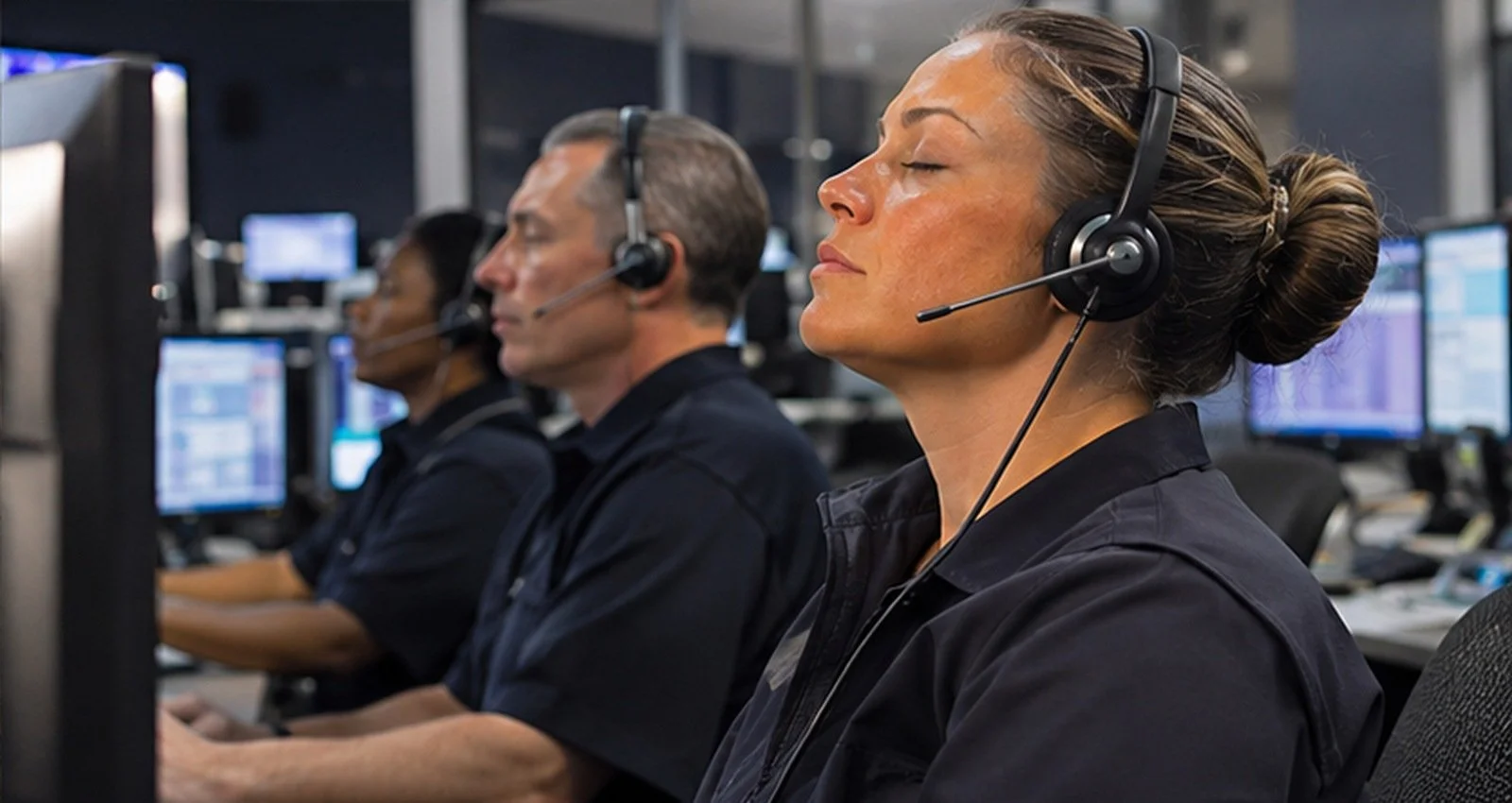
Many wellness recommendations assume people can choose when to take a break. First responders often cannot: calls overlap, staffing changes, and a brief pause may end as soon as the next task begins.
A realistic between-calls breathing reset therefore needs to be brief, flexible, and optional, rather than one more expectation added to an already demanding shift.
Attach the practice to a cue
The cue can be something that already happens during a shift: returning to the station, clearing a call, finishing a report, or stepping away from a dispatch console when coverage permits. If the situation is safe and time allows, that moment can prompt a brief check-in with breathing and physical tension.
A familiar guided pattern can reduce the need to decide what to do while already under pressure: follow a comfortable rhythm rather than inventing a new strategy. If work requires immediate attention, stop the practice and return to the task.
What a reset can and cannot do
After a demanding call, the body may remain activated even when the immediate event has ended. When a pause is possible, a comfortable breathing rhythm may provide a concrete point of attention and support a shift in perceived stress or arousal. It does not need to make the person feel completely relaxed to be useful. Studies in general populations have reported reductions in self-reported stress with some breathwork practices, but the findings should not be assumed to apply identically across emergency-service settings.
A breathing reset cannot resolve understaffing, poor supervision, repeated exposure to distressing events, or disrupted sleep. Nor has it been shown to prevent burnout or trauma-related symptoms in first responders. Meaningful workplace wellness also requires organizational support, realistic opportunities to recover, and access to appropriate professional care.
Make regulation part of professionalism
Public-safety work already relies on skills rehearsed before they are needed. A short breathing routine can be approached in the same practical way: become familiar with it during quieter moments and use it only when circumstances permit. Here, regulation means noticing and responding to one's level of activation, not trying to remain calm or relaxed at all times.
Potential Benefits
Notice physical signs of stress that may linger after a difficult call, such as a tight jaw, tense shoulders, or hurried breathing.
Refocus attention before the next task by following a familiar, comfortable breathing rhythm when a safe pause is possible.
Have a practiced response to moments of tension, instead of having to decide what to try while already under pressure.
Ideal For
Police officers, firefighters, EMS personnel, and 911 dispatchers.
Supervisors seeking feasible, voluntary wellness practices for their teams.
Public-safety professionals who prefer brief, practical skills to long meditation sessions.
Where Respa Fits
When an appropriate break is available, Respa Mindfulness can help make a paced-breathing practice familiar and repeatable. Guided sessions provide a clear breathing pattern, while the wearable offers real-time feedback on how closely the user follows that pattern. Respa is a mindfulness and biofeedback tool; it does not measure oxygen, carbon dioxide, lung capacity, or heart-rate variability, and it does not diagnose a medical condition.
A Note on Safety
Use guided breathing only when it is operationally safe and immediate responsibilities are covered. Never let a session interfere with driving, patient care, emergency communications, or situational awareness. Stop and return to natural breathing if dizziness, air hunger, or discomfort occurs. Persistent distress warrants appropriate workplace and clinical support.
References
Perez RA, Jetelina KK, Reingle Gonzalez JM. The Chronic Health Effects of Work-Related Stressors Experienced by Police Communications Workers. Saf Health Work. 2021;12(3):365-369. doi:10.1016/j.shaw.2021.05.005. PMID:34527398.
Fincham GW, Strauss C, Montero-Marin J, Cavanagh K. Effect of breathwork on stress and mental health: A meta-analysis of randomised-controlled trials. Sci Rep. 2023;13:432. doi:10.1038/s41598-022-27247-y.
Keesee TL. Just Breathe: How Managing the Breath Helps Public Safety Make Mindful, Value-Driven Decisions at Work and at Home. Kendall Hunt; 2026.
Just Breathe podcast, hosted by Tracie L. Keesee. 2026.
Zaccaro A, Piarulli A, Laurino M, et al. How Breath-Control Can Change Your Life: A Systematic Review on Psycho-Physiological Correlates of Slow Breathing. Front Hum Neurosci. 2018;12:353. doi:10.3389/fnhum.2018.00353.
Balban MY, Neri E, Kogon MM, et al. Brief structured respiration practices enhance mood and reduce physiological arousal. Cell Rep Med. 2023;4(1):100895. doi:10.1016/j.xcrm.2022.100895.