
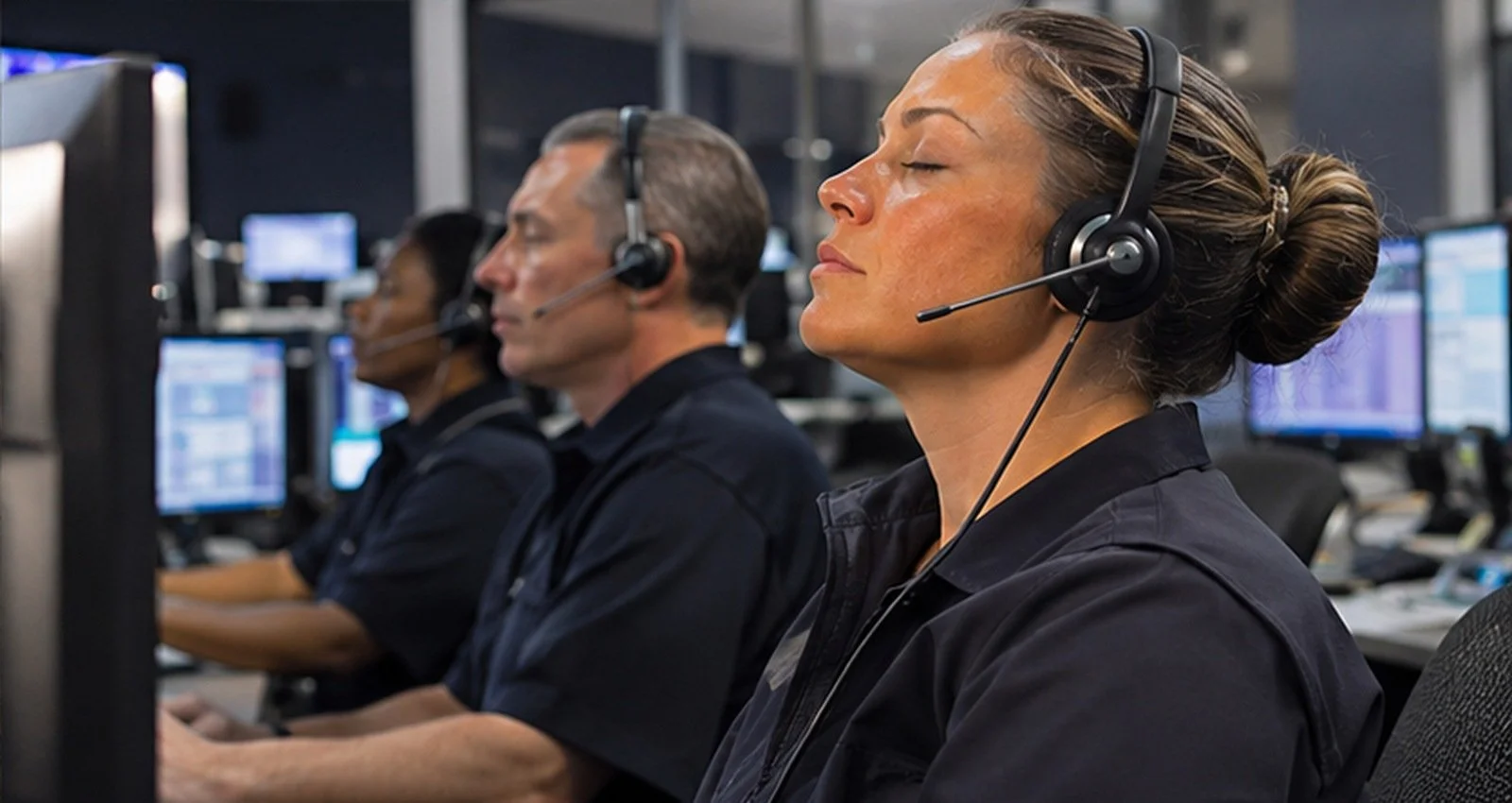
Leadership under pressure starts before the decision
Public-safety leadership is often discussed through policy, tactics, ethics, communication and accountability. Dr. Tracie L. Keesee's Just Breathe work adds another consideration: noticing the physical and emotional responses that can accompany a difficult decision.
Her 2026 book, Just Breathe: How Managing the Breath Helps Public Safety Make Mindful, Value-Driven Decisions at Work and at Home, addresses the demands of leadership in high-pressure public-safety settings. Her podcast extends that conversation through discussions of decision-making, wellness, accountability and the realities of the profession.
The body enters the decision room, too
Stress involves more than thoughts. During demanding situations, people may notice faster breathing, muscle tension or changes in attention. In the opening Just Breathe podcast episode, Dr. Keesee and psychologist Dr. Laurence Miller discuss how physiological responses can shape what public-safety professionals notice and how they approach decisions under pressure.
This perspective places breathing in a broader context than relaxation alone. The relevant skill is becoming aware of rising activation and, when circumstances allow, choosing a response that fits the situation rather than trying to eliminate every sign of stress.
Breath is a practice, not a promise
Research on slow and structured breathing in broader populations suggests possible benefits for perceived stress and some physiological measures. However, these findings do not establish that a breathing exercise improves tactical decisions, prevents trauma or addresses the organizational pressures facing public-safety teams.
A more useful takeaway is that breathing offers a familiar point of attention. With practice, professionals may become better at noticing tension, following a comfortable rhythm and pausing before their next interaction when it is safe to do so.
Put the skill into a leadership routine
Before a difficult briefing or conversation, a leader might take a short, comfortable breathing pause, notice tension in the jaw or shoulders and identify the value they want to bring to the interaction. After a demanding call or meeting, a similar check-in can help mark the transition to the next task. These are optional moments for practice when duties permit, not breathing protocols to use during active emergencies.
A natural connection to Respa
Respa can support this kind of preparation by guiding a comfortable breathing rhythm and providing feedback on how closely someone follows the selected pattern. This may be useful before difficult briefings, during a scheduled break or after a demanding day, rather than as an instruction to perform a breathing exercise in the middle of an active response.
The purpose is not to achieve a perfect breathing score. It is to create an opportunity to notice one's state and approach the next conversation or decision with more awareness of what matters in that moment.
Potential Benefits
Notice early signs of tension, such as a tightened jaw, tense shoulders or hurried breathing, before demanding conversations or decisions.
Use a familiar breathing practice to refocus attention before a difficult briefing or leadership interaction, when circumstances allow.
Create a more intentional transition after a challenging call or meeting by checking in with breathing and physical tension before moving on.
Ideal For
Law-enforcement and public-safety leaders.
Training academies and wellness teams.
Readers of Just Breathe and listeners of Tracie Keesee's podcast.
Where Respa Fits
Respa Mindfulness can help public-safety leaders practice a comfortable breathing rhythm during planned, operationally safe moments, such as before a shift, on an approved break or after a difficult meeting. Guided sessions offer a clear pattern, while the wearable provides real-time feedback on how closely the user follows it. Respa is a mindfulness and biofeedback tool; it does not measure oxygen, carbon dioxide, lung capacity or heart-rate variability, or diagnose a medical condition.
A Note on Safety
Use guided breathing only when it is operationally safe and will not interrupt situational awareness, urgent decisions or emergency response. Stop a pattern that causes dizziness, air hunger or discomfort. Breathwork may complement, but cannot replace, evidence-based mental-health care, trauma treatment, peer support, appropriate staffing, organizational reform or operational training.
References
Perez RA, Jetelina KK, Reingle Gonzalez JM. The Chronic Health Effects of Work-Related Stressors Experienced by Police Communications Workers. Saf Health Work. 2021;12(3):365-369. doi:10.1016/j.shaw.2021.05.005. PMID:34527398.
Fincham GW, Strauss C, Montero-Marin J, Cavanagh K. Effect of breathwork on stress and mental health: A meta-analysis of randomised-controlled trials. Sci Rep. 2023;13:432. doi:10.1038/s41598-022-27247-y.
Keesee TL. Just Breathe: How Managing the Breath Helps Public Safety Make Mindful, Value-Driven Decisions at Work and at Home. Kendall Hunt; 2026.
Keesee TL, host. Just Breathe [podcast]. 2026. Opening episode: Decision Making Under Stress: What the Body Knows With Doctor Miller (March 18, 2026). https://podcasts.apple.com/us/podcast/just-breathe/id1886259603
Zaccaro A, Piarulli A, Laurino M, et al. How Breath-Control Can Change Your Life: A Systematic Review on Psycho-Physiological Correlates of Slow Breathing. Front Hum Neurosci. 2018;12:353. doi:10.3389/fnhum.2018.00353.
Balban MY, Neri E, Kogon MM, et al. Brief structured respiration practices enhance mood and reduce physiological arousal. Cell Rep Med. 2023;4(1):100895. doi:10.1016/j.xcrm.2022.100895.