
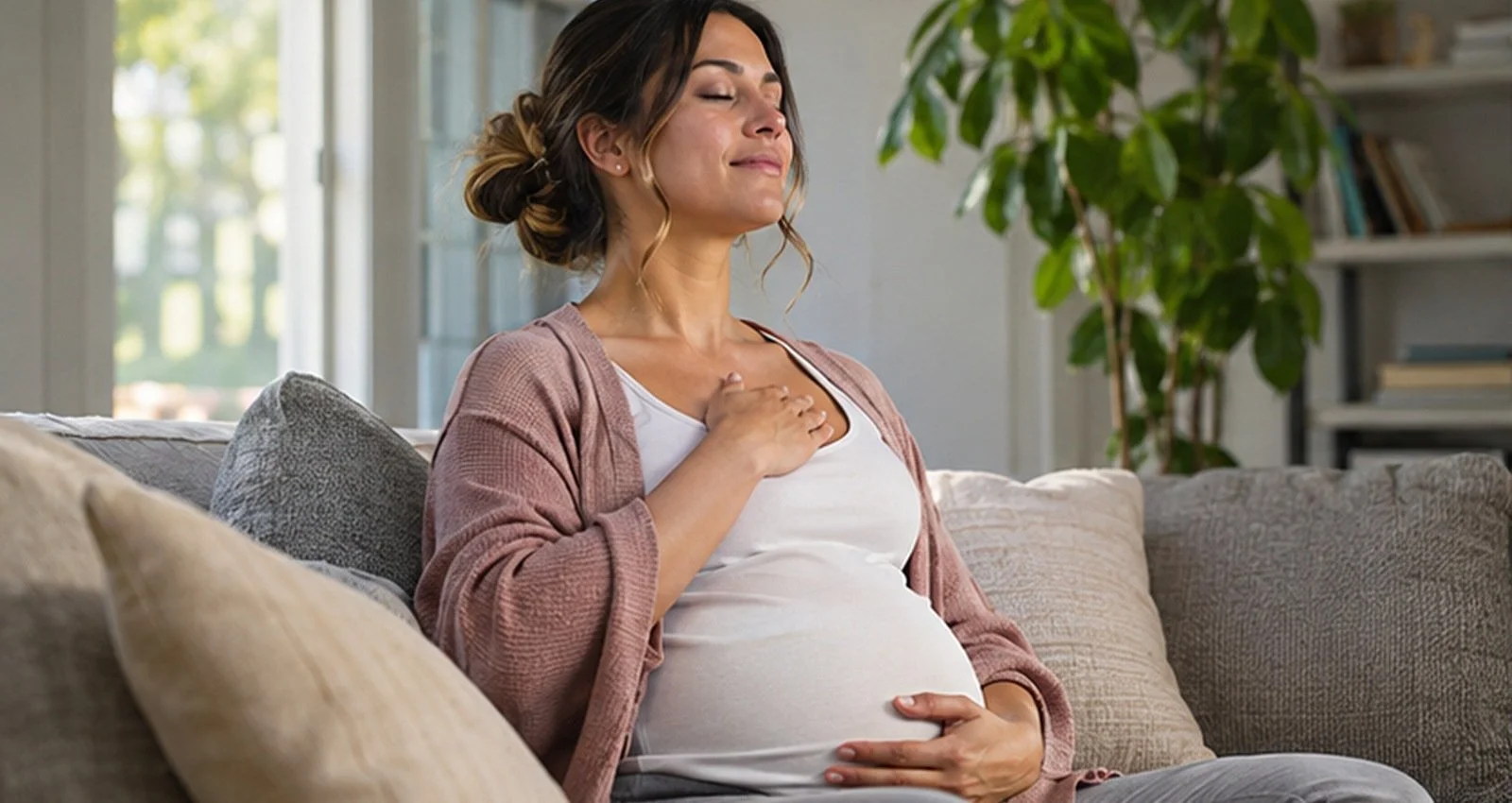
The third trimester changes the experience of breathing
During the third trimester, changes in the body can make breathing feel different. As the uterus grows, some people notice these changes more during activity or in positions that feel less comfortable.
This can be an opportunity to pay attention to how breathing feels, without turning that awareness into a demanding exercise.
Consistency beats complexity
A breathing practice does not need to be long or complicated. Choose a comfortable, supported position, relax your shoulders and jaw if possible, and follow an easy rhythm without straining or feeling short of breath. The goal is familiarity and gentle attention, not achieving a particular state of calm.
Prenatal yoga programs often combine breathing, gentle movement, and relaxation. Some research suggests potential benefits for well-being, but these elements are usually studied together, and the evidence varies in quality. The findings therefore cannot be attributed to breathing practice alone, and no single breathing cadence has been established as best for pregnancy.
Choose patterns conservatively
Respa offers structured tracks, including Basic, Moderate, Box, and extended-exhale patterns. Some patterns involve breath holds or longer cycles, which may not be appropriate for every pregnant person. The aim is not to progress to a more challenging track.
Ask your obstetric clinician or midwife whether guided breathing is suitable for your pregnancy and which patterns to avoid. If appropriate, choose a gentle rhythm that feels comfortable rather than one that is difficult to maintain.
Include the support person
If the pregnant person wishes, a partner or other support person can practice a familiar rhythm and a few simple cues with them. Having practiced together may make it easier to offer support later, while leaving room for changing preferences and the care team's guidance during labor.
Potential Benefits
Build familiarity with a gentle, repeatable breathing routine during the final weeks of pregnancy.
Practice noticing breathing and body tension without pressure to change either one.
Give a chosen support person a simple way to participate in preparation, if desired.
Ideal For
People in their third trimester who have been advised that gentle breathing practice is appropriate.
Pregnant people and their chosen support persons preparing for childbirth.
Those who want a simple, low-pressure addition to childbirth preparation.
Where Respa Fits
For expectant users whose prenatal care professional considers guided breathing appropriate, Respa can provide a structured way to become familiar with a gentle rhythm. Respa Mindfulness is designed to make structured breathing easier to practice consistently. Guided sessions provide a clear breathing pattern, while the wearable provides real-time feedback on how closely the user follows the session. Respa is a mindfulness and biofeedback tool; it does not measure oxygen, carbon dioxide, lung capacity, heart-rate variability, or diagnose a medical condition.
A Note on Safety
Before beginning or changing a structured breathing practice during pregnancy, ask your obstetric clinician or midwife what is appropriate for you, particularly for patterns involving breath holds. Stop if a pattern causes dizziness, discomfort, or a sense of air hunger. Seek prompt medical attention for concerning symptoms such as bleeding, regular painful contractions, fainting, chest pain, or significant shortness of breath.
References
Heim MA, Makuch MY. Breathing Techniques During Labor: A Multinational Narrative Review of Efficacy. J Perinat Educ. 2023;32(1):23-34. doi:10.1891/JPE-2021-0029. PMID:36632511.
Issac A, Nayak SG, Priyadarshini T, et al. Effectiveness of breathing exercise on the duration of labour: A systematic review and meta-analysis. J Glob Health. 2023;13:04023. doi:10.7189/jogh.13.04023. PMID:36896808.
Babbar S, Shyken J. Yoga in Pregnancy. Clin Obstet Gynecol. 2016;59(3):600-612. doi:10.1097/GRF.0000000000000210.