
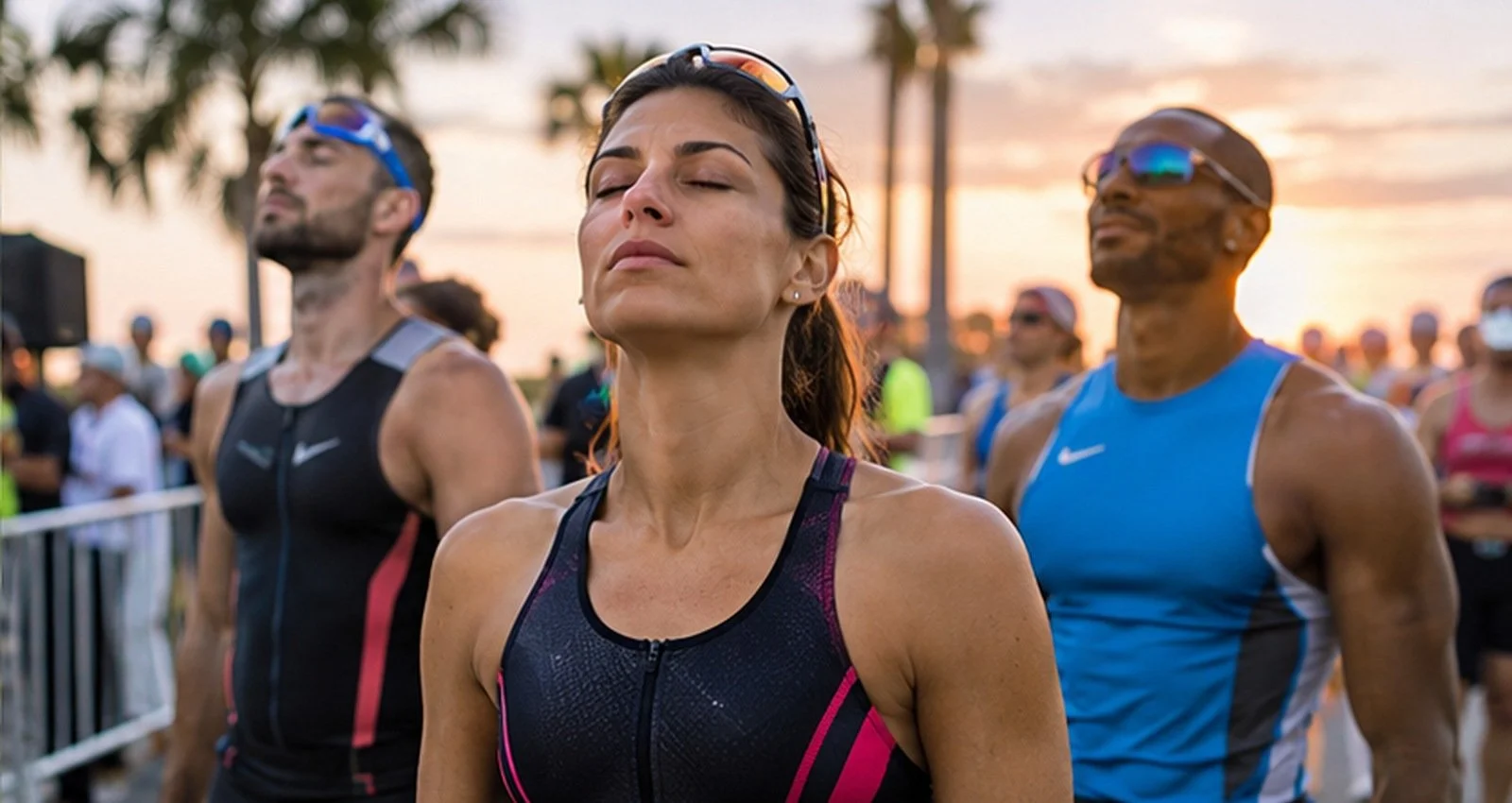
The workout ends before the body feels finished
A challenging run can end quickly: watch stopped, shoes off, phone out, back to daily responsibilities. But the body does not instantly return to its usual rhythm. Breathing and heart rate generally settle gradually, while attention may still feel caught up in the effort.
'Breathe Down' is a short transition ritual after the physical cooldown. When breathing feels comfortable again, spend a few minutes following a gentle, structured breathing pattern. The aim is to notice the shift from exercise to what comes next, not to force a particular feeling.
This is not a recovery hack
Breathwork is sometimes presented as a way to recover faster or improve performance. Those claims go beyond what the cited research demonstrates for a short guided session after running. Breathe Down has a more practical role: it offers a moment of attention and a familiar routine after demanding activity.
Studies of slow and structured breathing in broader populations report changes in some autonomic measures and reductions in perceived stress, although results and study methods vary. These findings support considering breathing practice for relaxation and self-regulation, not as a replacement for rest, hydration, nutrition or an appropriate training plan.
Make the transition visible
Begin with your usual walking cooldown and let your breathing settle naturally. Hydrate as needed. Once you can breathe comfortably, choose a gentle, familiar breathing session for a few minutes. Keep the rhythm easy, avoid uncomfortable breath holds, and return to natural breathing whenever you need to.
The sequence can be simple: finish the effort, cool down, breathe comfortably, and return to the rest of the day.
A ritual is valuable because it is repeatable
For runners, a useful routine is one they can actually repeat. Breathe Down does not need to become another training target or a score to improve. Its value lies in creating a recognizable boundary after exercise, with room for each day to feel different.
Potential Benefits
Establish a familiar transition after running.
Make space for relaxation and greater awareness after demanding exercise.
Practice shifting attention from training to the rest of the day.
Ideal For
Runners after intervals, long runs or races.
Athletes who feel mentally keyed up after training.
People who run later in the day and prefer a more deliberate transition afterward.
Where Respa Fits
After a run, Respa Mindfulness can guide a short breathing session once natural breathing feels comfortable again. Its wearable provides real-time feedback on how closely the user follows a selected breathing pattern, helping make the practice more consistent without treating that feedback as a measure of physical recovery. Respa is a mindfulness and biofeedback tool; it does not measure oxygen, carbon dioxide, lung capacity, heart-rate variability, or diagnose a medical condition.
A Note on Safety
Wait until acute breathlessness has eased and natural breathing feels comfortable before trying a paced session. Do not force a slow rhythm or long breath holds; stop if you feel dizzy or unwell. Seek prompt medical attention for unusual chest pain, fainting, severe shortness of breath or other concerning symptoms after exercise.
References
Fernández-Barradas EY, Reynoso-Sánchez LF, Herrera-Meza S, et al. Slow paced breathing and power posing: a pre-competitive ritual during an American football season. Front Sports Act Living. 2026;8:1800382. doi:10.3389/fspor.2026.1800382. PMID:42256048.
Zaccaro A, Piarulli A, Laurino M, et al. How Breath-Control Can Change Your Life: A Systematic Review on Psycho-Physiological Correlates of Slow Breathing. Front Hum Neurosci. 2018;12:353. doi:10.3389/fnhum.2018.00353.
Fincham GW, Strauss C, Montero-Marin J, Cavanagh K. Effect of breathwork on stress and mental health: A meta-analysis of randomised-controlled trials. Sci Rep. 2023;13:432. doi:10.1038/s41598-022-27247-y.
Balban MY, Neri E, Kogon MM, et al. Brief structured respiration practices enhance mood and reduce physiological arousal. Cell Rep Med. 2023;4(1):100895. doi:10.1016/j.xcrm.2022.100895.